
Entering a weight room or picking up a dumbbell for the first time can feel overwhelming. With so many machines, free weights, and conflicting fitness tips available online, knowing where to begin is often the hardest step.
However, weight training for beginners does not need to be complicated. You do not need complex acrobatics or elite athletic experience to build strength, improve health, and change your body composition. With a few foundational movements, a clear plan, and consistent execution, anyone can start lifting weights safely and effectively. This guide breaks down everything you need to know about starting your weight training journey from scratch.
Why Choose Weight Training? (The Benefits Beyond Muscle)
Before diving into exercises, it is essential to understand why weight lifting is one of the most effective uses of your exercise time. Strength training provides lifelong health benefits that go far beyond aesthetics.
- Increased Metabolic Rate: Muscle tissue burns more calories at rest than fat tissue. Building lean muscle helps elevate your basal metabolic rate (BMR), making body weight management significantly easier over time.
- Improved Bone Density: Weight-bearing exercise stresses your bones in a healthy, controlled way. This stimulates bone remodelling and increases density, reducing the risk of osteoporosis and fractures as you age.
- Enhanced Joint Health & Stability: Resistance training strengthens the tendons, ligaments, and supporting muscles around your joints, easing chronic pain (such as lower back discomfort) and preventing injuries in daily activities.
- Better Insulin Sensitivity: Muscular contraction helps your body utilise glucose directly from the bloodstream, improving blood sugar regulation and lowering the risk of metabolic conditions.
- Mental Clarity & Confidence: Successfully lifting a heavier weight over time builds mental resilience. The discipline developed in strength training frequently carries over into daily confidence and stress management.
Core Principles of Beginner Weight Training
To get the most out of your training while minimising the risk of injury, keep these four fundamental principles in mind:
1. Progressive Overload
Your body adapts when it is challenged beyond its current capacity. Progressive overload simply means gradually increasing the demands placed on your muscles over time. This does not mean adding heavy weight every workout; you can achieve progressive overload by:
- Adding a small amount of weight.
- Performing an extra repetition (rep) per set.
- Improving movement form and control.
- Decreasing rest intervals slightly between sets.
2. Consistency Over Intensity
A common beginner mistake is going all-out during the first week, experiencing severe muscle soreness, and skipping the next two weeks. Consistency yields better long-term results than occasional extreme effort. Aim for sustainable progress.
3. Quality of Movement Overload
Never sacrifice form to lift heavier weight. Executing an exercise through a full, controlled range of motion prevents unnecessary joint strain and ensures the target muscles do the work.
4. Adequate Recovery
Muscles do not grow while you are lifting; they grow while you recover. Muscles require rest, proper nutrition (especially protein), and sufficient sleep to repair and strengthen after workouts.

The 5 Fundamental Movement Patterns
A well-rounded beginner weight training routine should focus on compound movements—exercises that involve multiple joints and muscle groups working together. Base your training around these five fundamental movement patterns.
5 FUNDAMENTAL MOVEMENT PATTERNS
| Movement | Key Target Muscles
| 1. Squat (Lower) | Quadriceps, Glutes
| 2. Hinge (Lower) | Hamstrings, Glutes, Lower Back
| 3. Push (Upper) | Chest, Shoulders, Triceps
| 4. Pull (Upper) | Upper Back, Latissimus Dorsi, Biceps
| 5. Carry / Core | Abdominals, Obliques, Gripping
1. The Squat
The squat pattern involves bending at the knees and hips to lower your centre of gravity. It builds lower-body strength and improves mobility.
- Beginner Options: Bodyweight Squat, Goblet Squat (holding a dumbbell at chest height).
2. The Hinge
The hip hinge focuses on pushing the hips backward while maintaining a flat spine, bending primarily at the hip joint rather than the knees.
- Beginner Options: Dumbbell Romanian Deadlift (RDL), Glute Bridge.
3. The Upper-Body Push
Pushing movements move a resistance away from your body or push your body away from a surface.
- Beginner Options: Incline Push-Up, Dumbbell Bench Press, Overhead Dumbbell Press.
4. The Upper-Body Pull
Pulling movements bring a resistance toward your body or pull your body toward an anchor point, strengthening the back muscles essential for posture.
- Beginner Options: Dumbbell Single-Arm Row, Resistance Band Lat Pulldown.
5. Core & Stability
Core exercises teach your midsection to resist movement and stabilise your spine while forces are applied to the limbs.
- Beginner Options: Plank hold, Farmer’s Carry (walking while holding weights at your sides).
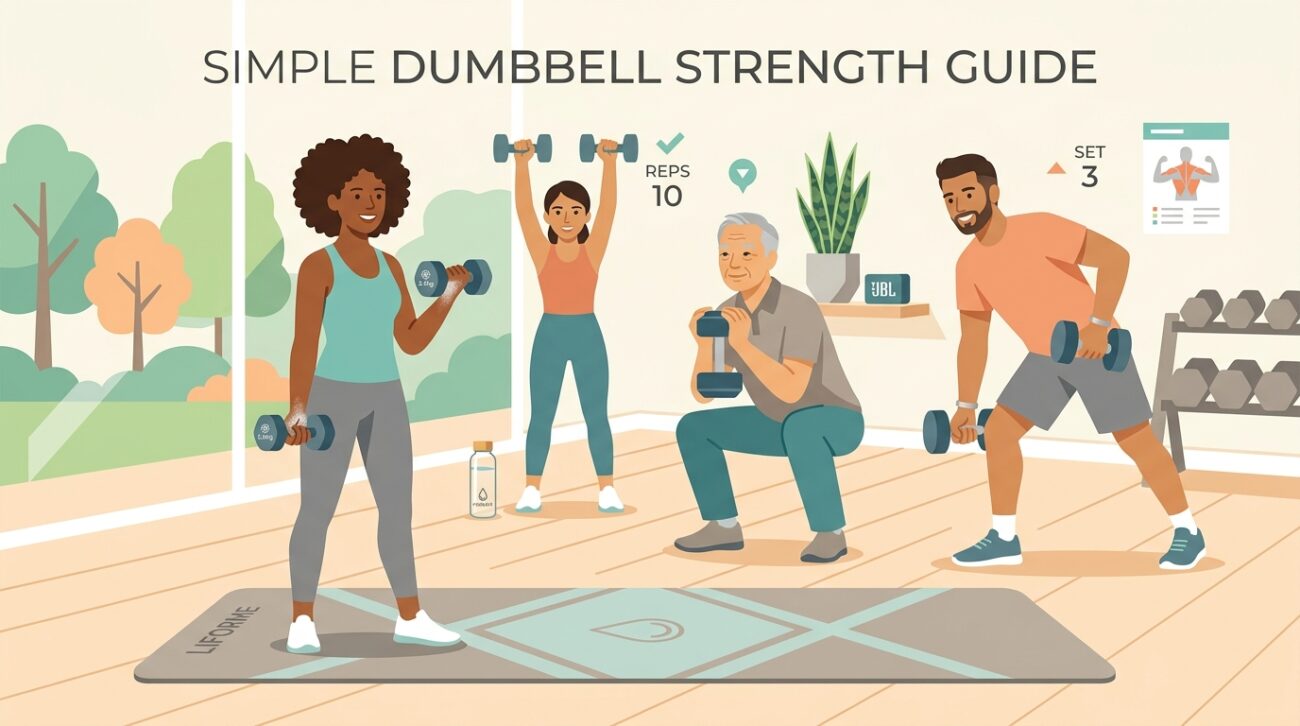
Simple 3-Day Full-Body Routine for Beginners
For most beginners, training three non-consecutive days per week (e.g., Monday, Wednesday, Friday) allows optimal stimulus and recovery.
Perform 3 sets of 8 to 12 repetitions for each exercise. Rest 60 to 90 seconds between sets.
Workout A
- Goblet Squat: 3 sets x 8–10 reps
- Dumbbell Bench Press (or Push-Up): 3 sets x 8–10 reps
- Single-Arm Dumbbell Row: 3 sets x 10–12 reps per side
- Plank Hold: 3 sets x 30–45 seconds
Workout B
- Dumbbell Romanian Deadlift (RDL): 3 sets x 8–10 reps
- Overhead Dumbbell Shoulder Press: 3 sets x 8–10 reps
- Lat Pulldown (or Resistance Band Pull-Down): 3 sets x 10–12 reps
- Farmer’s Carry: 3 sets x 30 seconds walking
Weekly Schedule Example:
- Monday: Workout A
- Tuesday: Rest / Light walking
- Wednesday: Workout B
- Thursday: Rest
- Friday: Workout A
- Saturday/Sunday: Rest / Active recovery
Common Beginner Mistakes to Avoid
To ensure steady progress and prevent unnecessary setbacks, avoid these frequent pitfalls:
- Skipping the Warm-Up: Cold muscles and stiff joints perform poorly and are prone to strain. Spend 5 to 10 minutes doing dynamic movements (arm circles, leg swings, bodyweight squats) before lifting.
- Copying Advanced Workouts: Routines used by professional bodybuilders or seasoned athletes involve volume and intensity that will overwhelm a beginner. Stick to basic compound movements.
- Ignoring Nutrition and Hydration: Strength training requires energy. Ensure you consume adequate protein to support muscle repair and stay hydrated throughout the day.
- Lifting Too Heavy Too Soon: Ego lifting often leads to poor form and injury. Start lighter than you think you need to, master the movement path, and earn the right to add weight.
How to Track Your Progress
Tracking your workouts is vital for continuous improvement. Keep a simple physical notebook or use a phone app to record:
- The exercise performed.
- The weight used.
- The sets and repetitions completed.
When you can easily complete 12 clean repetitions with a given weight across all sets, consider increasing the weight slightly during your next session.
Final Thoughts: Taking Your First Step
Starting a weight training journey is one of the most empowering choices you can make for your long-term health and physical capability. Remember that progress in strength training is cumulative—small, consistent efforts applied week after week produce remarkable physical changes over time. Focus on mastering proper form, remaining consistent, and listening to your body.