

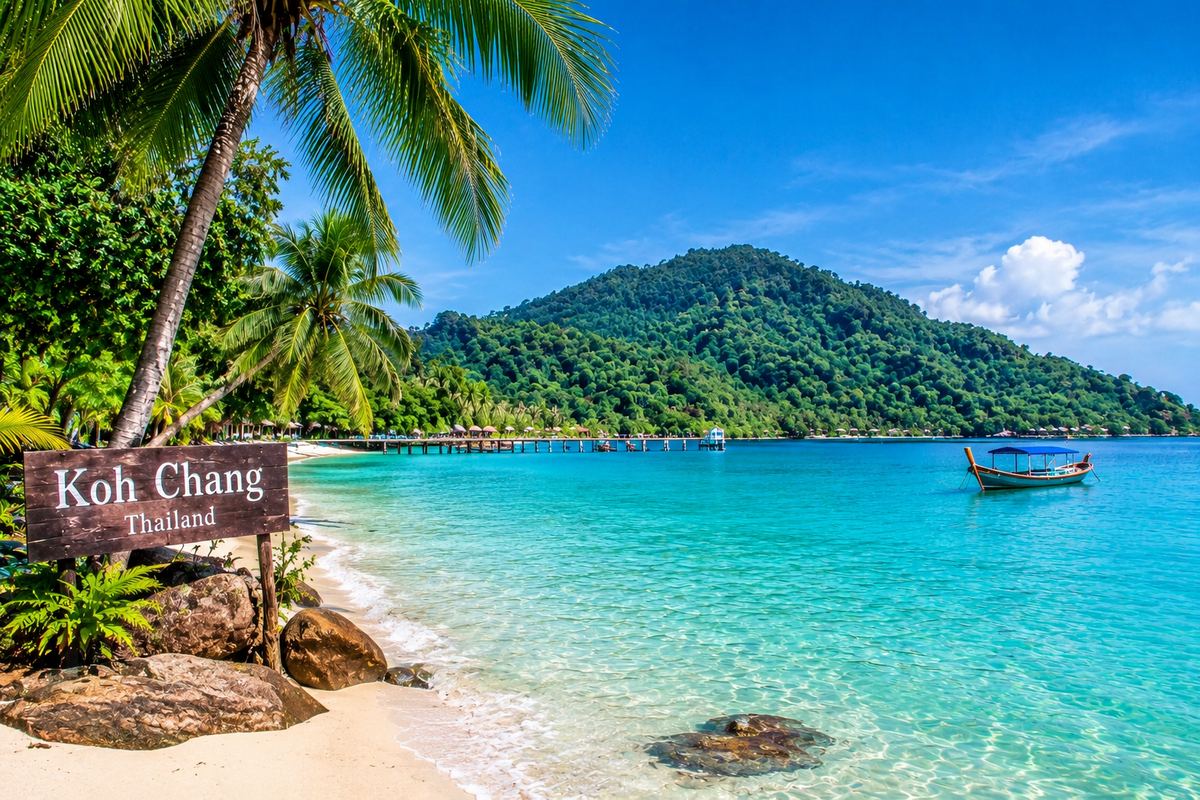
Tucked along Thailand’s eastern seaboard, close to the Cambodian border, Koh Chang Island remains one of the country’s most underrated destinations. While Phuket and Koh Samui draw the bulk of international attention, Koh Chang offers a quieter, more forested alternative where rainforest-covered mountains meet the Gulf of Thailand, and development has been kept deliberately modest.
This guide covers everything a first-time visitor needs to know: how to travel there from Chiang Mai, the best things to do once you arrive, whether the island has an airport of its own, and exactly how large Koh Chang is.
An Overview of Koh Chang
Koh Chang, also written as “Ko Chang” or “chang ko,” translates to “Elephant Island,” a name derived from the shape of one of its headlands rather than any resident elephant population. The island lies within Koh Chang, Trat Province, on Thailand’s eastern coast, approximately 300 kilometers from Bangkok and a short distance from the Cambodian border.
Unlike Thailand’s more heavily developed southern islands, Koh Chang has retained much of its natural landscape. A substantial portion of the interior consists of protected rainforest, part of a national marine park, while the western coastline is home to a series of beaches ranging from budget-friendly to upscale.
Best Time to Visit
The island’s climate follows Thailand’s broader seasonal pattern, and timing a visit correctly can significantly affect the overall experience. The dry season, running roughly from November through April, brings the clearest skies, calmer seas, and the most reliable conditions for boat trips to nearby islands. This period also coincides with peak tourist demand, so accommodation prices tend to rise accordingly.
The wet season, from May through October, brings heavier rainfall and rougher seas, which can limit some boat excursions. However, the island remains open year-round; the rainforest is noticeably greener, and accommodation is typically more affordable. Many showers during this period are short and localized rather than continuous, so travel is still very possible outside the peak months for those willing to plan around occasional wet afternoons.
How to Get from Chiang Mai to Koh Chang
Chiang Mai sits in northern Thailand, while Koh Chang lies in the southeast — there is no direct route between the two, and no direct flight. Reaching the island requires traveling in stages, typically via Bangkok.
Option 1: Fly to Bangkok, Then Continue to Trat
Flying is the fastest and most reliable method. Domestic flights operate frequently between Chiang Mai International Airport and Bangkok, with a flight time of just over an hour. From Bangkok, travelers have two options:
- Take a short connecting flight from Bangkok to Trat, the province where Koh Chang is located. This leg is brief, generally under an hour, and lands close to the ferry piers.
- Alternatively, take a bus or van from one of Bangkok’s terminals directly to Trat, a journey of roughly five to six hours depending on traffic conditions.
From Trat, a short taxi or minivan transfer connects to one of the ferry piers, followed by a 30- to 45-minute crossing to the island.
Option 2: Overnight Bus, Then Ferry
For travelers prioritizing cost over speed, an overnight bus from Chiang Mai to Bangkok is a practical alternative, followed by a connecting bus to Trat and the same ferry crossing outlined above. This route takes considerably longer, often close to a full day of travel, but reduces overall expense.
Estimated Total Travel Time
Depending on the route selected, the full journey from Chiang Mai to Koh Chang typically takes between 8 and 14 hours door to door, accounting for flight or bus connections, transfer waiting times, and the final ferry crossing. Flying via Bangkok to Trat remains the most time-efficient option.
What to Do in Koh Chang
Once on the island, visitors will find a broad range of activities suited to both relaxation and more active pursuits.
Beaches Along the West Coast
The island’s west coast hosts its most popular beaches, each with a distinct character. White Sand Beach is the most developed, lined with restaurants and beachfront amenities, while quieter beaches further south remain largely undeveloped, particularly outside peak season.
Rainforest Trails and Waterfalls
With much of the interior still forested, Koh Chang offers some of the better waterfall hikes in Thailand. Trails wind through dense jungle toward cascading pools, and guided treks are widely available for those who prefer not to navigate independently. Many tours also include opportunities to observe local wildlife, including birds and monitor lizards.
Diving and Snorkeling
Koh Chang sits within a marine national park encompassing dozens of smaller islands, several of which offer strong visibility and healthy coral reefs. Day trips by speedboat can be arranged from most piers on the island and typically include stops at multiple snorkeling sites along with a beachside lunch.
Bang Bao Fishing Village
Located on the island’s southern tip, Bang Bao is a traditional fishing village built on stilts over the water. Its narrow wooden walkways, lined with seafood restaurants and small shops, make it a popular stop for an afternoon visit, particularly near sunset.
Additional Activities
Visitors seeking more active pursuits will find zip-lining courses through the forest canopy, ethical elephant sanctuaries that do not permit riding, and kayaking routes along the island’s mangrove coastline. Several Muay Thai gyms also operate on the island for travelers looking to combine training with their stay.
Does Koh Chang Have an Airport?
Koh Chang island itself does not have an airport located on its landmass. However, Trat Airport, which serves the wider province, is situated on the mainland and is only about a 15-minute drive from the ferry piers that connect to the island.
This arrangement makes access more straightforward than it might initially appear. Travelers fly into Trat, transfer by taxi or shared van to the pier, and complete the journey with a scenic ferry crossing of roughly 30 minutes. While this is an additional step compared to islands with airports built directly on them, the ferry ride is generally well regarded, offering strong early views of the island’s forested terrain from the water.
How Big Is Koh Chang?
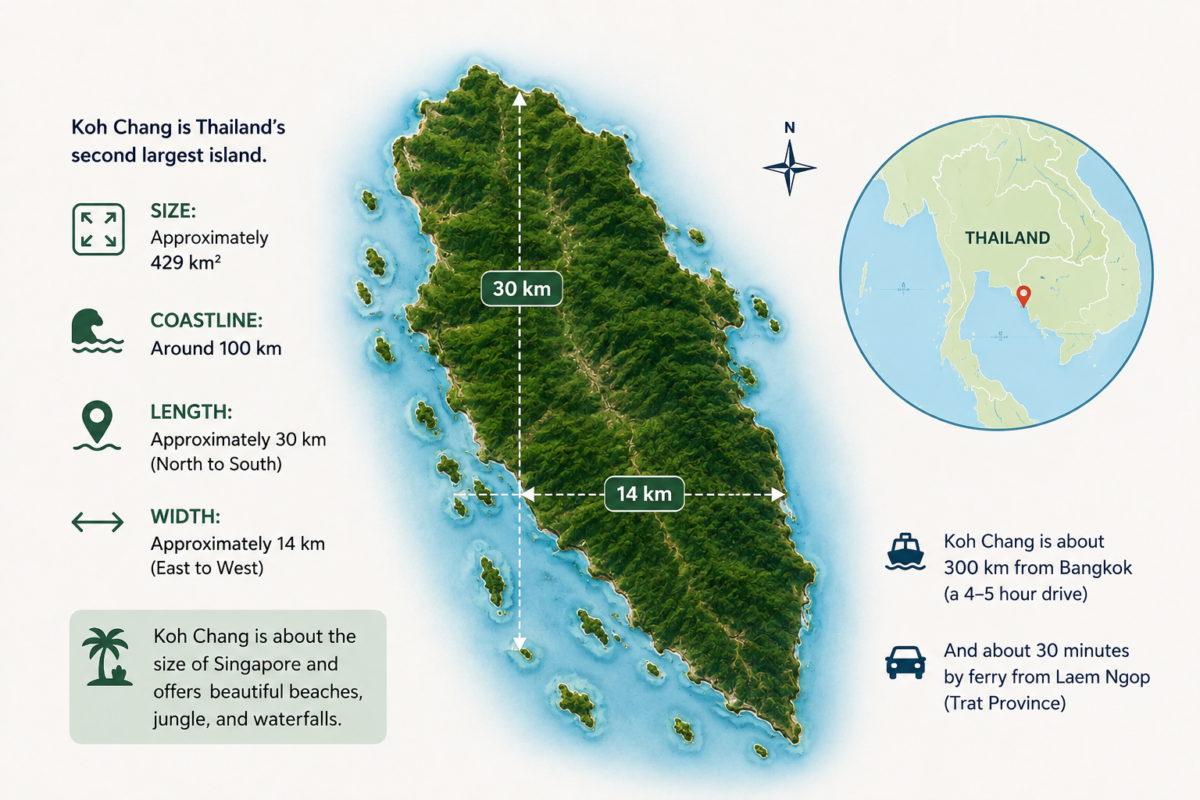
Koh Chang is larger than many visitors expect. The island measures approximately 30 kilometers in length and 14 kilometers at its widest point, covering a total land area of around 217 square kilometers. This makes it the third-largest island in Thailand, surpassed only by Phuket and Koh Samui, and the largest island along the country’s eastern coast.
Despite its scale, the island has avoided significant overdevelopment. A large proportion of its land falls within Mu Ko Chang National Park, which restricts construction and preserves much of the interior as protected rainforest and mountainous terrain. Its highest point, Khao Salak Phet, rises above 700 meters, giving the island a notably rugged profile for a destination primarily associated with beach tourism.
Given its size, navigating the island requires some planning. Most visitors rely on rented scooters or songthaews, shared pickup-truck taxis, to move between beaches, as distances between the main areas are not practical to cover on foot. A single main road runs along the western coastline, connecting most beaches, resorts, and villages.
Practical Tips for Planning Your Trip
A few additional considerations can make the journey to Koh Chang Island smoother:
- Book ferry tickets in advance during peak season. While ferries run frequently, morning crossings can fill up quickly between December and February.
- Carry Thai baht in cash for smaller vendors. Card payment is common in larger resorts but less reliable at local restaurants, markets, and songthaew drivers.
- Confirm which pier your ferry departs from. Trat has more than one pier serving the island, and transfers are pier-specific.
- Pack for both sun and rain regardless of season. Even during the dry months, brief afternoon showers are not unusual given the island’s tropical climate.
- Allow a buffer day on either end of the trip. Given the multi-stage journey from Chiang Mai, building in some flexibility helps absorb any delays with flights, buses, or ferry schedules.
Final Thoughts
Koh Chang presents a version of Thailand that feels less commercialized than the country’s more famous island destinations. The journey from Chiang Mai requires some planning, given the distance involved, but a flight or bus connection through Bangkok to Trat, followed by a short ferry crossing, is a manageable and well-established route. Once on the island, its beaches, waterfalls, fishing villages, and forested interior offer more than enough to fill an extended stay.
Whether the appeal lies in diving, hiking, or simply a quieter alternative to Thailand’s better-known resorts, koh chang trat province rewards the effort required to reach it, and it is easy to understand why so many travelers to Koh Chang end up extending their visit well beyond their original plans.