

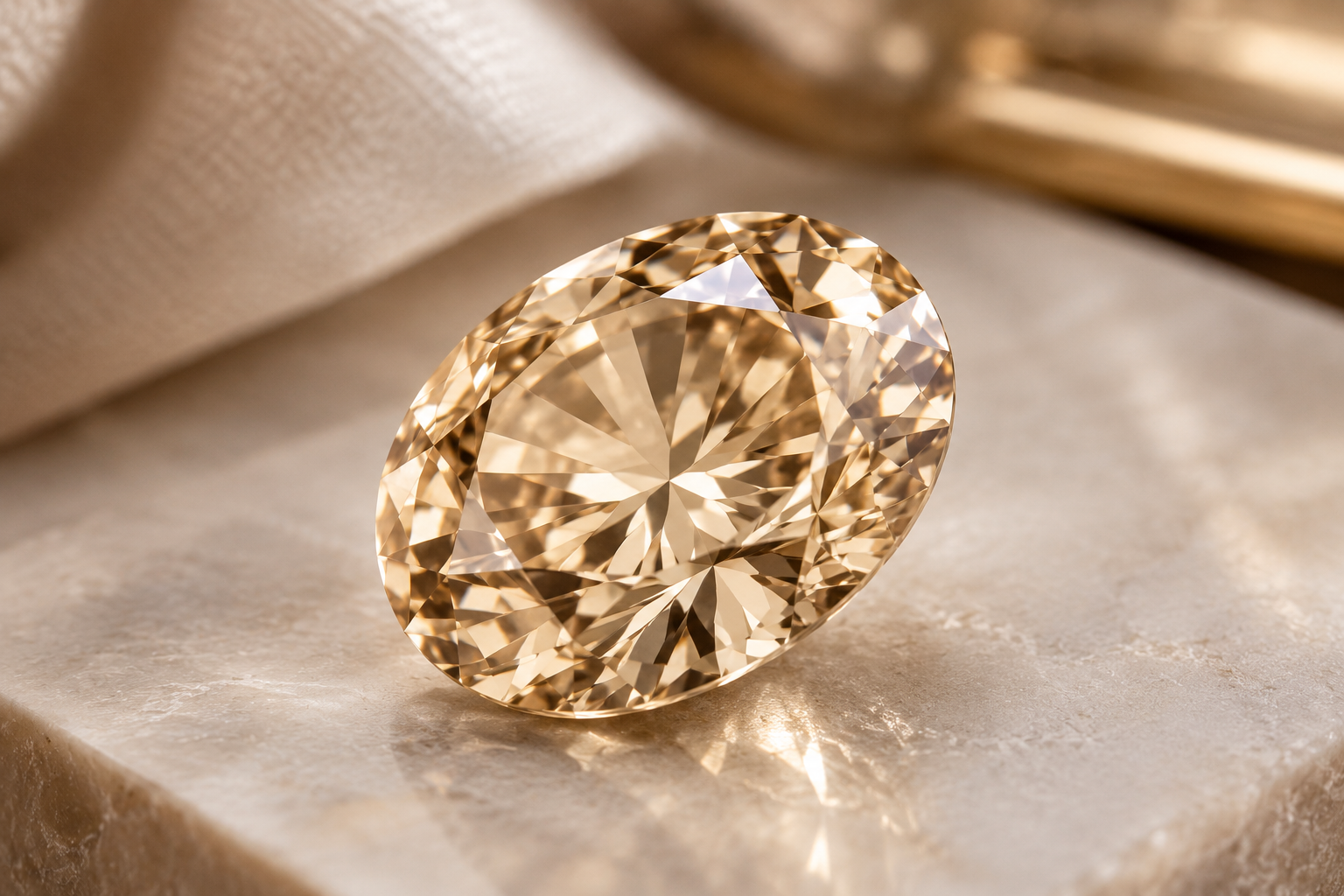
A champagne diamond is one of the most distinctive choices in the world of fine jewelry. Instead of the traditional bright, colorless appearance associated with classic diamonds, champagne diamonds display warm shades of brown, gold, honey, and caramel. Their natural warmth gives them a sophisticated character that can make an engagement ring or other piece of jewelry look completely different from conventional diamond designs.
Interest in champagne diamonds has grown because modern jewelry buyers are increasingly looking for stones that feel personal rather than predictable. A champagne diamond can offer that individuality while still providing the brilliance, durability, and symbolism associated with a natural diamond.
However, buying one raises some important questions. What exactly is a champagne diamond? Are champagne diamonds worth anything? How much does a 2-carat champagne diamond cost? Most importantly, how can you tell whether you’re getting good value for your money?
This guide answers those questions while explaining the characteristics that influence champagne diamond prices.
What Is Champagne Diamond?
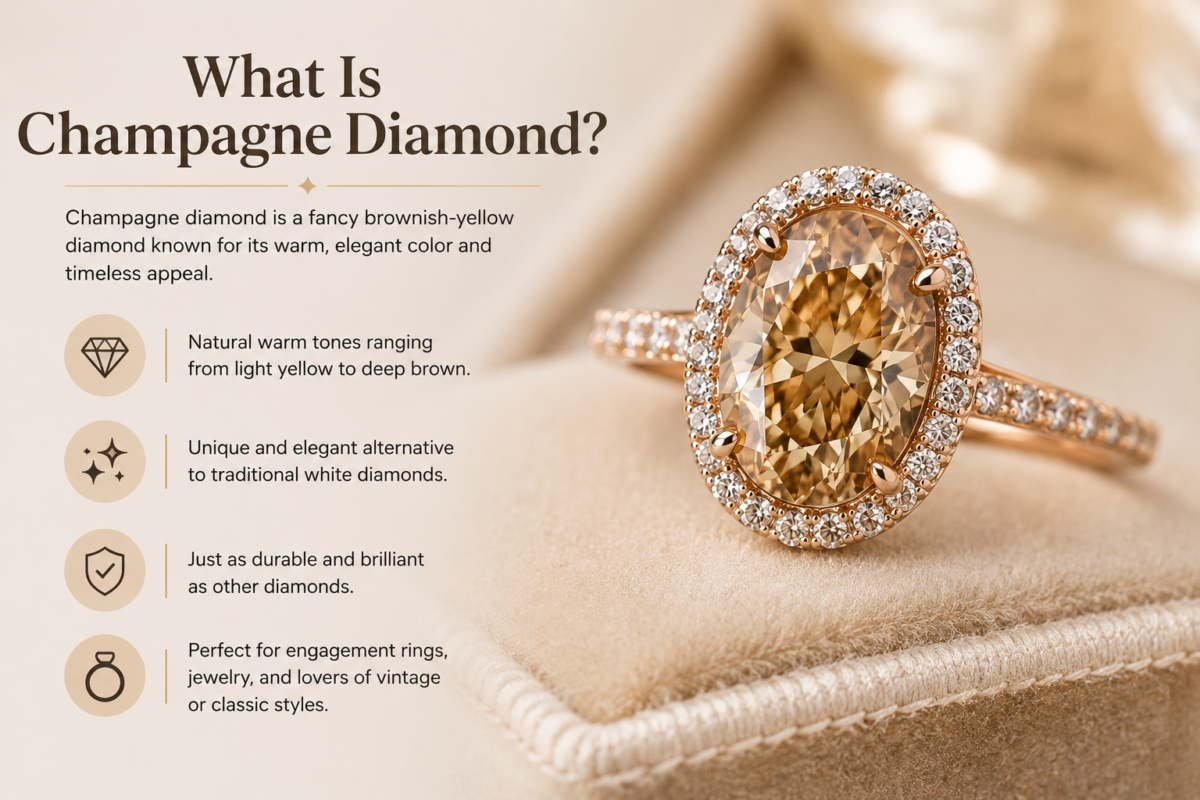
A champagne diamond is a diamond with a naturally occurring brown, golden-brown, yellow-brown, or honey-colored appearance. The term “champagne” is commonly used by the jewelry industry to describe diamonds with lighter, warmer brown tones.
The color develops because of structural characteristics created inside the diamond during its formation deep beneath the Earth’s surface. These characteristics affect the way light interacts with the stone, producing its distinctive brown or golden appearance.
Unlike a colorless diamond, where the absence of noticeable body color is highly desirable, the color itself is an important part of a champagne diamond’s appeal.
Champagne Diamond Color Range
Not every champagne diamond looks the same. The color can range from extremely subtle to rich and intense.
Common shades include:
- Light champagne: Soft, pale, and delicate
- Golden champagne: Warm with noticeable golden undertones
- Honey champagne: Richer and slightly deeper
- Brown champagne: More pronounced brown coloration
- Cognac: Deep, saturated brown with warm golden or reddish undertones
This range gives buyers considerable flexibility. Someone who wants a subtle engagement ring may prefer a light champagne diamond, while someone looking for a dramatic statement piece might choose a deeper cognac-colored stone.
What Makes Champagne Diamonds Different?
The biggest difference is simple: champagne diamonds celebrate color rather than trying to eliminate it.
Traditional white diamonds are commonly evaluated for how close they are to being colorless. Champagne diamonds take the opposite approach. Their warm body color becomes part of the design.
That creates an entirely different visual effect.
A champagne diamond can look especially attractive when combined with:
- Yellow gold
- Rose gold
- White gold
- Platinum
- Halo settings
- Vintage-inspired settings
- White diamond accents
For example, a champagne center stone surrounded by small colorless diamonds can create a striking contrast. The warmer center catches attention while the surrounding stones add additional brilliance.
Are Champagne Diamonds Natural?
Many champagne diamonds are natural diamonds that formed underground over geological periods. However, not every brown or champagne-colored diamond on the market is necessarily natural and untreated.
Some diamonds can be:
- Naturally colored
- Laboratory-grown
- Color treated
- Enhanced through other processes
That distinction matters because origin and treatment can influence price.
If you’re purchasing an expensive champagne diamond, ask the seller for a reputable grading report. The documentation should clearly identify important characteristics and any relevant treatments.
Are Champagne Diamonds Worth Anything?
Yes, champagne diamonds are absolutely worth something. However, their value isn’t determined by color alone.
The price of a champagne diamond can vary significantly depending on its carat weight, color, clarity, cut, origin, certification, and overall visual appeal.
One of the biggest mistakes buyers make is assuming that every champagne diamond is inexpensive because it isn’t colorless. The reality is more complicated.
Some champagne diamonds are relatively affordable compared with certain colorless diamonds, while rare and highly desirable natural colored diamonds can command substantial prices.
Why Do Champagne Diamonds Have Varying Values?
Diamond value depends on a combination of characteristics rather than one simple measurement.
1. Color
Color is particularly important for a champagne diamond.
A beautiful, evenly distributed golden-brown color can make a stone highly attractive. However, not every brown shade has the same market appeal.
The intensity, tone, and saturation of the color can influence desirability. A champagne diamond with a lively golden appearance may appeal to a different buyer than one with a very dark brown appearance.
This is why you should judge the actual stone rather than relying only on the word “champagne” in a product description.
2. Carat Weight
Carat indicates the diamond’s weight, not just its physical size.
As carat weight increases, comparable diamonds generally become rarer. That can result in a higher price per carat.
For example, a high-quality 2-carat champagne diamond can cost considerably more than a similar 1-carat stone.
However, doubling the carat weight doesn’t automatically mean doubling the price. Other quality characteristics still matter.
3. Cut Quality
Cut is one of the most important factors to consider when buying a champagne diamond.
A well-cut diamond can interact with light beautifully, producing flashes of brilliance and sparkle. A poorly cut diamond may appear less lively even if it has an impressive carat weight.
Don’t make the mistake of choosing a diamond based only on size. If sparkle matters to you, examine the stone’s proportions and overall appearance carefully.
5. Clarity
Clarity refers to the features both inside and outside a diamond.
Some inclusions are extremely difficult to notice without magnification. Others may affect transparency or appearance.
Because champagne diamonds already have body color, certain inclusions can sometimes be less noticeable to the naked eye. Even so, clarity remains an important consideration when comparing stones.
6. Natural Origin and Treatment
A natural champagne diamond and a laboratory-grown diamond aren’t priced the same way.
Likewise, treatments that modify a diamond’s color can affect its market value.
Before purchasing, ask a simple question:
Is the champagne color natural, or has the diamond been treated?
A reputable seller should be able to provide a clear answer and appropriate documentation.
Are Champagne Diamonds a Good Investment?
This question deserves a realistic answer.
A champagne diamond can be an excellent jewelry purchase, but you shouldn’t automatically treat it as a financial investment.
Diamond resale markets aren’t as straightforward as buying stocks, bonds, or other conventional investments. Retail prices can include substantial margins, and the amount you receive when reselling a diamond may be significantly different from what you originally paid.
Rare natural fancy-color diamonds can behave differently from ordinary commercial diamonds, particularly when they possess exceptional color and rarity. Still, buyers shouldn’t assume that every champagne diamond will increase in value.
The safest approach is to buy a champagne diamond because you love its appearance and symbolism. Any future financial value should be considered secondary.
How Much Is a 2 Carat Champagne Diamond?
The price of a 2-carat champagne diamond can vary dramatically.
There isn’t one fixed price because two 2-carat champagne diamonds can have completely different qualities. A commercially graded stone with modest characteristics may cost far less than a beautifully cut natural diamond with an attractive color and strong documentation. As a broad guide, prices can range from hundreds or low thousands of dollars to many thousands of dollars, depending on the diamond’s characteristics and market positioning. For an exact valuation, you need to evaluate the individual stone rather than relying on carat weight alone.
What Affects the Price of a 2-Carat Champagne Diamond?
| Factor | Impact on Price |
| Carat weight | Larger stones are generally rarer |
| Color | Attractive and desirable color can increase demand |
| Color intensity | Stronger or distinctive color may affect pricing |
| Cut | Better proportions can improve brilliance |
| Clarity | Higher clarity can increase value |
| Origin | Natural and laboratory-grown stones have different markets |
| Treatment | Treated stones may have different values |
| Certification | Independent documentation can support confidence |
| Shape | Certain shapes may have different demand |
| Brand | Designer jewelry can include additional premiums |
Why Two 2-Carat Champagne Diamonds Can Cost Completely Different Amounts
Imagine you’re comparing two diamonds that both weigh exactly 2 carats.
The first has weak proportions, noticeable inclusions, an unattractive brown tone, and limited documentation.
The second has excellent proportions, appealing golden-champagne color, good clarity, strong brilliance, and reliable certification.
Although both diamonds weigh 2 carats, their prices can be dramatically different.
That’s why carat weight should never be the only thing you consider when shopping for a champagne diamond.
Does a 2-Carat Champagne Diamond Look Large?
A 2-carat diamond can make a strong visual statement, but its apparent size depends on its shape and proportions.
Different diamond shapes distribute their weight differently. A well-proportioned stone may also appear larger or more visually impressive than a poorly cut stone with the same weight. If you’re choosing a 2-carat champagne diamond for an engagement ring, consider the setting too. A halo setting can make the center stone appear larger, while a simple solitaire can place all the attention on the champagne diamond itself.
How to Choose the Best Champagne Diamond
Buying a champagne diamond becomes much easier when you know what to inspect.
1. Start With the Color
Choose the shade that appeals to you rather than automatically selecting the darkest or lightest option.
Look at the diamond under different lighting conditions. Natural daylight can reveal characteristics that aren’t obvious under jewelry-store lighting.
2. Prioritize Cut and Sparkle
A beautiful color means little if the diamond looks dull.
Watch how the stone reacts to light. A lively champagne diamond should show attractive flashes and brightness when you move it.
3. Check the Certification
For a significant purchase, documentation is important.
A reputable grading report can help verify the diamond’s characteristics and provide greater transparency about its origin and treatment status.
4. Compare Similar Diamonds
Don’t compare a 2-carat champagne diamond with every other 2-carat stone on the market.
Instead, compare diamonds with similar:
- Color
- Cut
- Clarity
- Shape
- Origin
- Treatment status
- Certification
This creates a much more meaningful price comparison.
5. Consider the Jewelry Setting
The setting can dramatically change how a champagne diamond looks.
Yellow gold emphasizes the diamond’s warm tones. Rose gold creates a romantic, coordinated appearance. White gold and platinum provide contrast and can make the champagne color stand out more strongly.
Are Champagne Diamonds Good for Engagement Rings?
Absolutely.
A champagne diamond can be an excellent choice for an engagement ring if you want something that feels elegant but less conventional than a traditional white diamond.
Its warm color works particularly well with vintage, modern, minimalist, and nature-inspired designs.
A champagne diamond can also symbolize individuality. Instead of choosing the most traditional option, you’re selecting a stone with its own distinct personality.
Final Thoughts
A champagne diamond combines the durability and brilliance of diamond with a warm, distinctive color that sets it apart from traditional colorless stones. Its shades can range from soft champagne and honey to rich brown and cognac, giving buyers plenty of options. Yes, champagne diamonds are worth money. However, their value depends on far more than carat weight. Color, cut, clarity, origin, treatment, certification, and overall appearance all play important roles.
When it comes to a 2-carat champagne diamond, prices can vary substantially. Don’t assume that two stones with identical carat weights should have identical prices. Instead, compare their complete quality profiles and choose the stone that offers the best combination of beauty, documentation, and value for your budget.
Ultimately, the appeal of a champagne diamond comes down to its character. If you want a gemstone that feels warm, sophisticated, distinctive, and genuinely different from the traditional white diamond, champagne may be exactly the color you’ve been looking for.