

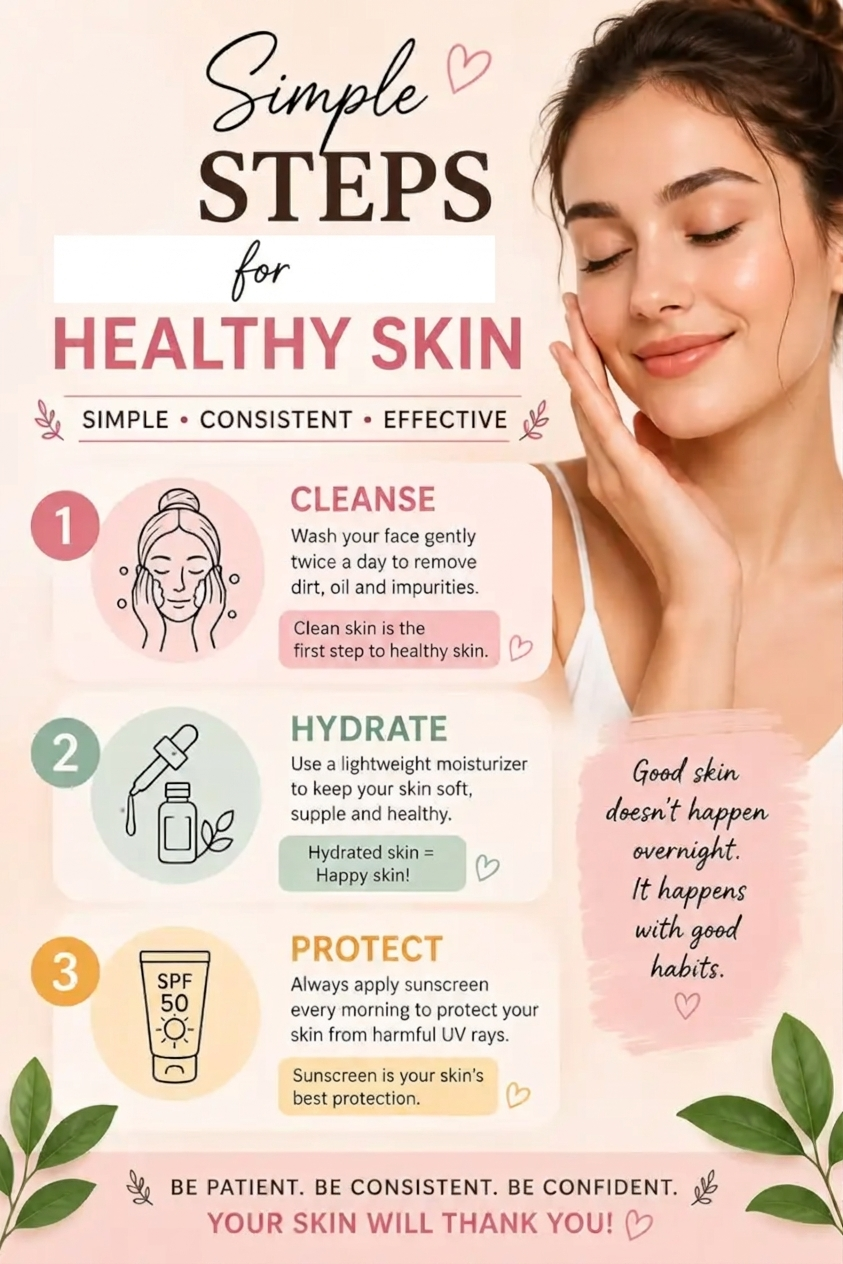

Starting a skincare routine can feel confusing when there are hundreds of cleansers, serums, creams, and treatments available. The good news is that you do not need a complicated 10-step routine to take care of your skin. The best skincare routine for beginners should be simple, consistent, and suited to your individual skin type.
A good beginner routine usually starts with three essential steps: cleanse, moisturise, and protect your skin from the sun. The American Academy of Dermatology (AAD) also emphasises simple, consistent skincare rather than using a large number of products. Whether you have oily, dry, combination, normal, or sensitive skin, learning the basics can help you build a routine that is easier to follow. This guide explains the best skincare routine for beginners, what products to choose, how to use them, and which common mistakes to avoid.
What Is the Best Skincare Routine for Beginners?
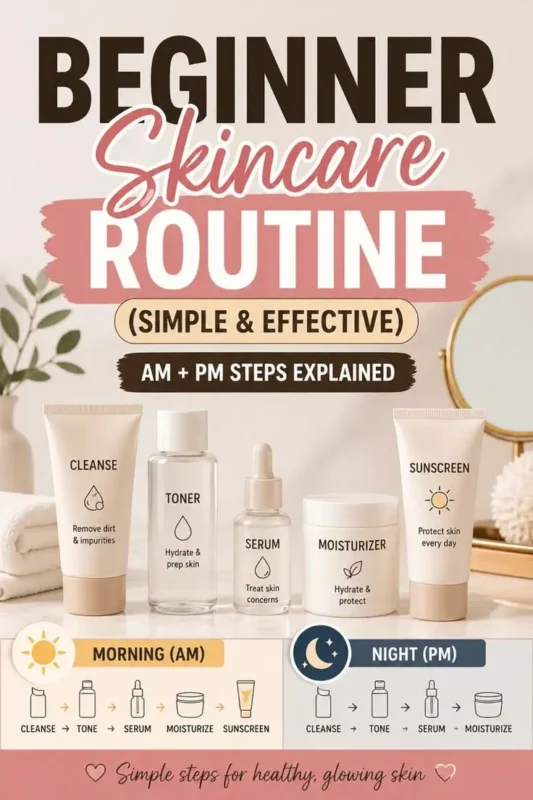
Simple steps for healthy skin do not require a complicated routine or a large number of products. Instead of buying multiple active ingredients immediately, start with the essentials: a gentle cleanser, a suitable moisturiser, and sunscreen. These basic products can help you build a simple, consistent skincare routine that is easier to follow every day.
The Three Essential Skincare Steps
| Step | Product | Main Purpose |
| 1 | Gentle cleanser | Removes dirt, oil, and impurities |
| 2 | Moisturiser | Helps maintain skin hydration |
| 3 | Sunscreen | Protects against harmful UV radiation |
Once your skin becomes comfortable with these basics, you can consider adding a targeted product for concerns such as acne, dark spots, or uneven texture. The AAD recommends using a gentle, non-abrasive cleanser and avoiding harsh scrubbing because irritation can damage the skin barrier.
Best Skincare Routine for Beginners: Morning Routine
A simple morning routine can protect your skin throughout the day.
1. Cleanse Your Face
Start with a gentle facial cleanser. Wet your face with lukewarm water, apply the cleanser using your fingertips, and rinse gently. Avoid using very hot water or aggressively rubbing your skin. According to dermatologists, excessive scrubbing can irritate the skin. If your skin is very dry or sensitive, you may not need an aggressive cleansing routine. Pay attention to how your skin feels after washing.
2. Apply moisturiser.
Moisturiser is one of the essential simple steps for healthy skin, even if you have oily skin. It helps support the skin barrier and reduce dryness. People with oily or acne-prone skin can look for products labelled “oil-free” or “non-comedogenic”, which are less likely to clog pores. For dry skin, moisturising ingredients such as ceramides and hyaluronic acid can help improve hydration and keep the skin feeling comfortable.
3. Apply Sunscreen
Sunscreen is one of the most important steps in the best skincare routine for beginners.
Choose a sunscreen that provides:
- SPF 30 or higher
- Broad-spectrum protection
- Water resistance
The AAD recommends broad-spectrum, water-resistant sunscreen with SPF 30 or higher. Sunscreen should be applied before going outdoors and reapplied approximately every two hours when you remain outdoors, as well as after swimming or sweating. Sunscreen helps protect against sunburn, premature skin ageing, and skin cancer.
Best Skincare Routine for Beginners: Night Routine
Your evening routine does not need to be complicated.
1. Remove Makeup and Sunscreen
If you wear makeup or sunscreen, remove it thoroughly before cleansing. You can use a suitable makeup remover or cleansing product before your regular gentle cleanser.
2. Cleanse Your Skin
Wash your face with a gentle cleanser and lukewarm water. Pat your skin dry with a clean, soft towel instead of rubbing. The AAD recommends limiting face washing to twice daily and after heavy sweating for most people.
3. Apply a Treatment If Needed
After cleansing, beginners may eventually add one targeted treatment based on their main skin concern. For example, a person dealing with acne might discuss suitable ingredients with a dermatologist. However, adding several strong active ingredients at once can make irritation more likely.
4. Finish With Moisturiser
Apply moisturiser after cleansing or treatment. This is an important final step because hydration supports the skin barrier. The recommended general order is cleanser, treatment or medication, moisturiser, and sunscreen in the morning.
How to Choose Products for Your Skin Type
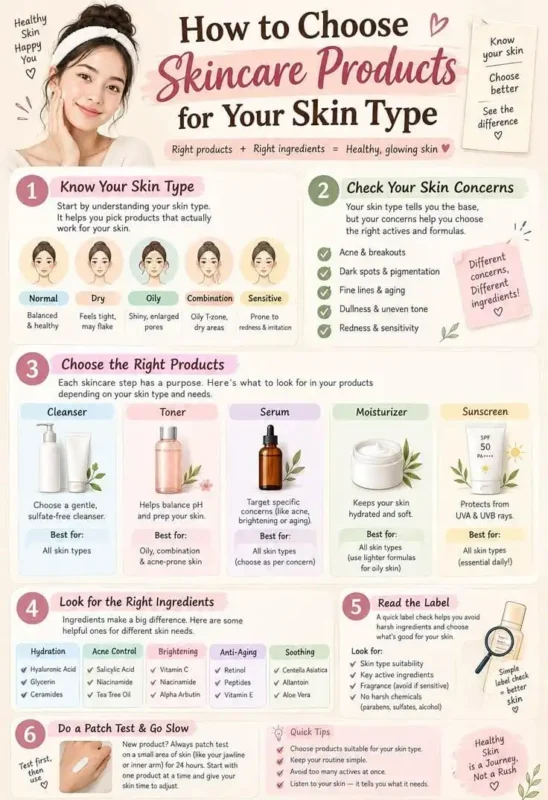
One of the most important parts of Simple Steps for Healthy Skin is understanding your skin type.
Oily Skin
Oily skin may produce excess sebum and can be more prone to clogged pores.
Consider:
- Lightweight moisturiser
- Gentle foaming cleanser
- Non-comedogenic products
- Lightweight sunscreen
- Avoiding excessively harsh cleansers
Using an overly strong cleanser can irritate oily skin and may make the skin feel even more uncomfortable.
Dry Skin
Dry skin often benefits from a more moisturising routine.
Look for:
- Cream-based moisturisers
- Fragrance-free products
- Ceramides
- Hyaluronic acid
- Gentle cleansers
Moisturising immediately after washing can help retain water in the skin.
Combination Skin
Combination skin can have oily areas, particularly around the forehead, nose, and chin, while other areas may feel dry. A balanced routine usually works better than using very harsh products on the entire face.
Frequently Asked Questions
1. What is the Best Skincare Routine for Beginners?
The best skincare routine for beginners usually includes three basic steps: cleansing, moisturising, and applying sunscreen. In the evening, cleanse your face and apply moisturiser. Additional treatments can be introduced later depending on your skin concerns.
2. How Many Times Should a Beginner Wash Their Face?
For most people, washing the face twice a day—once in the morning and once at night—is sufficient. You may also cleanse after heavy sweating. Avoid excessive washing because it can cause dryness or irritation.
3. Should Beginners Use Serum?
Beginners do not necessarily need a serum. It is better to establish a basic routine first. After that, you can consider a serum designed for a specific concern, such as hydration or uneven skin tone.
4. Can I Follow a Skincare Routine Every Day?
Yes. A basic skincare routine can generally be followed every day. Daily consistency with cleansing, moisturising, and sun protection can make the routine easier to maintain.
5. What Should I Apply First: Moisturiser or Sunscreen?
In a morning routine, apply moisturiser first and sunscreen afterwards. Sunscreen should be the final skincare step before makeup.
6. Is Sunscreen Really Necessary for Beginners?
Yes. Sunscreen is an important part of a beginner skincare routine because UV exposure can contribute to sunburn, premature skin ageing, and skin cancer. Dermatologists generally recommend broad-spectrum sunscreen with SPF 30 or higher.
7. What Is a Simple Skincare Routine for Beginners?
A simple routine can be:
Morning:
Cleanser → Moisturiser → Sunscreen
Night:
Cleanser → Treatment (if needed) → Moisturiser
Starting with these basic steps is often easier than immediately following a complicated multi-product routine.
Conclusion
The best skincare routine for beginners does not need to be complicated or expensive. Start with the basics: a gentle cleanser, a suitable moisturiser, and broad-spectrum sunscreen with SPF 30 or higher. Once your skin becomes comfortable with these essential products, you can gradually introduce targeted treatments based on your specific skin concerns.
Consistency is more important than using a large number of products. Pay attention to how your skin reacts, avoid introducing several new products at the same time, and choose products that match your skin type. With a simple and consistent routine, beginners can build healthier skincare habits and better understand what their skin needs.